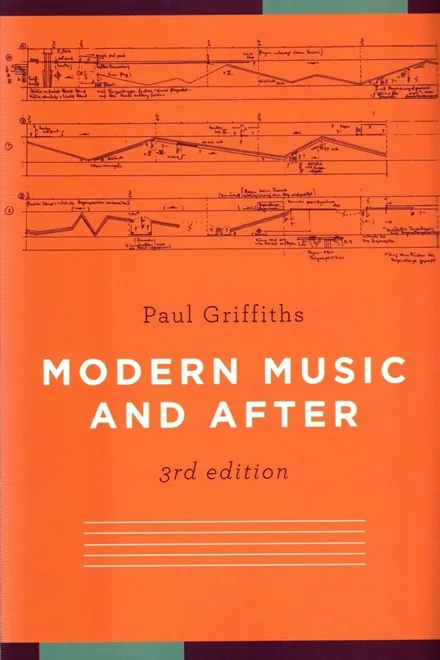
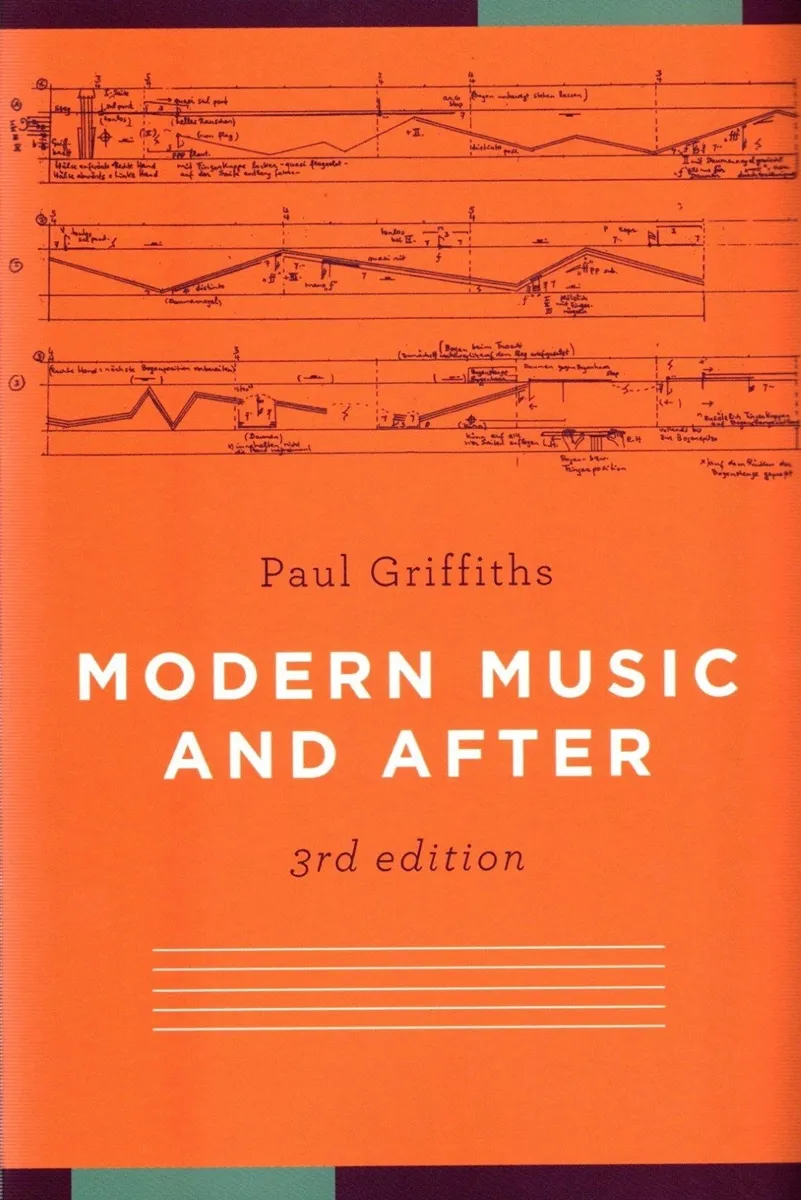
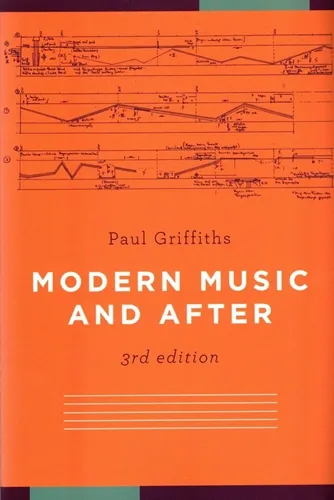
Modern Music And After
Marca: Oxford
Cód: M289228P
Nº de Páginas: 456
ISBN: 9780199740505
Idioma: inglês
Enviamos para todo Brasil e Exterior
Quantidade
Ao longo de três décadas, a pesquisa de Paul Griffiths permaneceu como o estudo definitivo da música desde a Segunda Guerra Mundial; esta edição totalmente revisada e atualizada restabelece Música Moderna e pós-moderna como a introdução proeminente à música de nosso tempo.
As interrupções da guerra e as lutas pela paz que se seguiu refletiram-se na música da época: na reforma radical da técnica composicional de Pierre Boulez e no desenvolvimento da música zen por John Cage; na resolução de Milton Babbitt do sistema serial e nas sinfonias perturbadoras de Dmitry Shostakovich; no desenvolvimento da música eletrônica por Karlheinz Stockhausen e na busca de Luigi Nono pelo universalmente humano, na visão de Iannis Xenakis da música como uma matemática sonora e na consideração de Luciano Berio dela como linguagem. As iniciativas desses compositores e de seus contemporâneos abriram perspectivas que ainda não pararam de se desenvolver.
Essa constante expansão do pensamento musical desde 1945 nos deixou sem uma história singular da música; O estudo de Griffiths, portanto, segue vários caminhos diferentes, mostrando como e por que eles convergem e divergem. Esta nova edição discute não apenas a música dos quinze anos que se passaram desde a edição anterior, mas também a recente explosão de interesse acadêmico na última metade do século XX. Em particular, o livro foi expandido para incorporar a variedade de respostas ao impasse modernista vivido pelos compositores das décadas de 1980 e 1990.
Griffiths então move o livro para o século XXI enquanto examina compositores altamente influentes como Helmut Lachenmann e Salvatore Sciarrino.
Por sua amplitude, riqueza de detalhes e sagacidade e clareza características, a terceira edição de Modern Music And After é leitura obrigatória para o aluno e o ouvinte inquiridor.
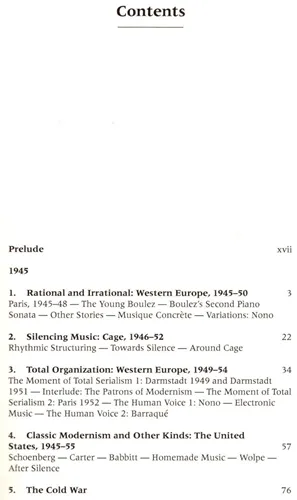
INDÍCE:
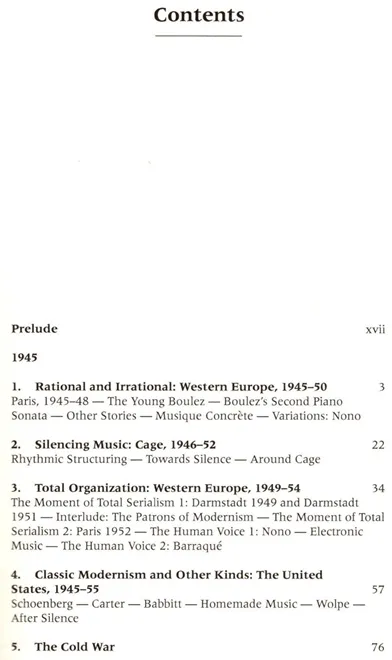
Prelude
1945
1. Rational and irrational: western Europe, 1945-50
Paris, 1945-8 - The young Boulez - Boulez's Second Piano Sonata - Other stories - Musique concrète - Variations: Nono
2. Silencing music: Cage, 1946-52
Rhythmic structuring - Towards silence - Around Cage
3. Total organization: western Europe, 1949-54
The moment of total serialism 1: Darmstadt 1949 and Darmstadt 1951 - Interlude: the patrons of modernism - The moment of total serialism 2: Paris 1952 - The human voice 1: Nono - Electronic music - The human voice 2: Barraqué
4. Classic modernism and other kinds: the United States, 1945-55
Schoenberg - Carter - Babbitt - Home-made music - Wolpe - After silence
5. The Cold War
6. Extension and development: western Europe, 1953-6
From points to groups - Systems of organization - Le Marteau sans maître - Sound and word - ...how time passes... - Statistics
1956
7. Mobile form: 1956-61
Cage - Stockhausen and Boulez - Boulez and Berio - Barraqué - Exit from the labyrinth
8. Elder responses
Stravinsky - Messiaen - Varèse - Symphonists and others
9. Reappraisal and disintegration: 1959-64
Questioning voices: Ligeti, Bussotti, Kagel - Stumbling steps: Kurtág - Listening ears: Cage, Young, Babbitt - Exploiting the moment: Stockhausen - The last concert: Nono
1965
10. Of elsewhen and elsewhere
The distant past - (The imaginary past) - The distant or not so distant east - Quotation - Meta-music
11. Music theatre
Opera and 'Opera' - Music theatre - Instrumental theatre
12. Politics
Cardew - Rzewski - The composer in the factory
13. Virtuosity and improvisation
The virtuoso - Virtuosity in question - The electric musician - Improvisation
14. Orchestras or Computers
Ochestras - Computer Music
15. Minimalism and melody
New York minimalism - Minimalism in Europe - Melody
16. Ending
1975
17. Holy Minimalisms
Pärt - Tavener and Górecki - (Messiaen) - Ustvolskaya
18. New Romanticisms
Rihm - Schnittke, and the hectic present - Gubaidulina, and the visionary future - Silvestrov, and the reverberating past - Symphony? - Feldman and loss - Lachenmann and regain
19. New Simplicities
Cage, or innocence - Denyer, or outsiderness - Kurtág, or immediacy - Holliger, or extremity - Sciarrino, or intimacy
20. New Complexities
Ferneyhough - Finnissy - Charged solos
21. Old Complexities
Carter and the poets - Xenakis and the Arditti Quartet - Nono and listening - Stockhausen and Licht - Birtwistle and ritual - Berio and memory - IRCAM and Boulez
22. Spectralisms
Radulescu and Tenney - Grisey - Vivier
23. (Unholy?) Minimalisms
Reich - Andriessen
24. Eclecticisms
Kagel et al. - Donatoni - Bolcom and Adams - Ligeti
1989
25. Towards mode/meme
Rootless routes: Ligeti - Memory's memorials: Berio and Kurtág - Remade modes: Adams, Adès, Benjamin - Pesson's past and Pauset's - Traditions' tracks: around Zorn
26. Towards the strange self
Act I: Schneewittchen - Entr'acte: Kurtág's Beckett - Act II: Luci mie traditrici - Entr'acte: Birtwistle's Celan - Act III: Three Sisters - Entr'acte: Kyburz's no-one - Act IV: Das Mädchen mit den Schwefelhölzern
27. Towards transcendence
Gubaidulina and Christ - Haas and darkness - Harvey and the Buddha - Grisey and rebirth
2001
28. Towards change?
Resources
Index
As interrupções da guerra e as lutas pela paz que se seguiu refletiram-se na música da época: na reforma radical da técnica composicional de Pierre Boulez e no desenvolvimento da música zen por John Cage; na resolução de Milton Babbitt do sistema serial e nas sinfonias perturbadoras de Dmitry Shostakovich; no desenvolvimento da música eletrônica por Karlheinz Stockhausen e na busca de Luigi Nono pelo universalmente humano, na visão de Iannis Xenakis da música como uma matemática sonora e na consideração de Luciano Berio dela como linguagem. As iniciativas desses compositores e de seus contemporâneos abriram perspectivas que ainda não pararam de se desenvolver.
Essa constante expansão do pensamento musical desde 1945 nos deixou sem uma história singular da música; O estudo de Griffiths, portanto, segue vários caminhos diferentes, mostrando como e por que eles convergem e divergem. Esta nova edição discute não apenas a música dos quinze anos que se passaram desde a edição anterior, mas também a recente explosão de interesse acadêmico na última metade do século XX. Em particular, o livro foi expandido para incorporar a variedade de respostas ao impasse modernista vivido pelos compositores das décadas de 1980 e 1990.
Griffiths então move o livro para o século XXI enquanto examina compositores altamente influentes como Helmut Lachenmann e Salvatore Sciarrino.
Por sua amplitude, riqueza de detalhes e sagacidade e clareza características, a terceira edição de Modern Music And After é leitura obrigatória para o aluno e o ouvinte inquiridor.
INDÍCE:
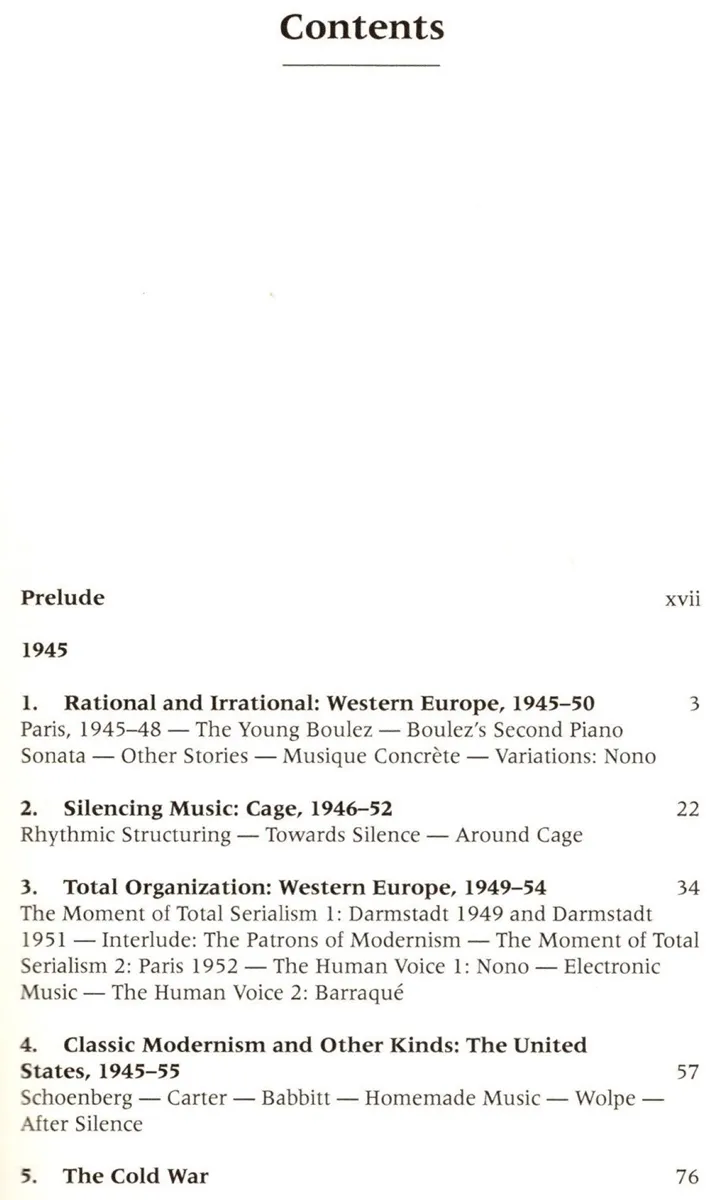
Prelude
1945
1. Rational and irrational: western Europe, 1945-50
Paris, 1945-8 - The young Boulez - Boulez's Second Piano Sonata - Other stories - Musique concrète - Variations: Nono
2. Silencing music: Cage, 1946-52
Rhythmic structuring - Towards silence - Around Cage
3. Total organization: western Europe, 1949-54
The moment of total serialism 1: Darmstadt 1949 and Darmstadt 1951 - Interlude: the patrons of modernism - The moment of total serialism 2: Paris 1952 - The human voice 1: Nono - Electronic music - The human voice 2: Barraqué
4. Classic modernism and other kinds: the United States, 1945-55
Schoenberg - Carter - Babbitt - Home-made music - Wolpe - After silence
5. The Cold War
6. Extension and development: western Europe, 1953-6
From points to groups - Systems of organization - Le Marteau sans maître - Sound and word - ...how time passes... - Statistics
1956
7. Mobile form: 1956-61
Cage - Stockhausen and Boulez - Boulez and Berio - Barraqué - Exit from the labyrinth
8. Elder responses
Stravinsky - Messiaen - Varèse - Symphonists and others
9. Reappraisal and disintegration: 1959-64
Questioning voices: Ligeti, Bussotti, Kagel - Stumbling steps: Kurtág - Listening ears: Cage, Young, Babbitt - Exploiting the moment: Stockhausen - The last concert: Nono
1965
10. Of elsewhen and elsewhere
The distant past - (The imaginary past) - The distant or not so distant east - Quotation - Meta-music
11. Music theatre
Opera and 'Opera' - Music theatre - Instrumental theatre
12. Politics
Cardew - Rzewski - The composer in the factory
13. Virtuosity and improvisation
The virtuoso - Virtuosity in question - The electric musician - Improvisation
14. Orchestras or Computers
Ochestras - Computer Music
15. Minimalism and melody
New York minimalism - Minimalism in Europe - Melody
16. Ending
1975
17. Holy Minimalisms
Pärt - Tavener and Górecki - (Messiaen) - Ustvolskaya
18. New Romanticisms
Rihm - Schnittke, and the hectic present - Gubaidulina, and the visionary future - Silvestrov, and the reverberating past - Symphony? - Feldman and loss - Lachenmann and regain
19. New Simplicities
Cage, or innocence - Denyer, or outsiderness - Kurtág, or immediacy - Holliger, or extremity - Sciarrino, or intimacy
20. New Complexities
Ferneyhough - Finnissy - Charged solos
21. Old Complexities
Carter and the poets - Xenakis and the Arditti Quartet - Nono and listening - Stockhausen and Licht - Birtwistle and ritual - Berio and memory - IRCAM and Boulez
22. Spectralisms
Radulescu and Tenney - Grisey - Vivier
23. (Unholy?) Minimalisms
Reich - Andriessen
24. Eclecticisms
Kagel et al. - Donatoni - Bolcom and Adams - Ligeti
1989
25. Towards mode/meme
Rootless routes: Ligeti - Memory's memorials: Berio and Kurtág - Remade modes: Adams, Adès, Benjamin - Pesson's past and Pauset's - Traditions' tracks: around Zorn
26. Towards the strange self
Act I: Schneewittchen - Entr'acte: Kurtág's Beckett - Act II: Luci mie traditrici - Entr'acte: Birtwistle's Celan - Act III: Three Sisters - Entr'acte: Kyburz's no-one - Act IV: Das Mädchen mit den Schwefelhölzern
27. Towards transcendence
Gubaidulina and Christ - Haas and darkness - Harvey and the Buddha - Grisey and rebirth
2001
28. Towards change?
Resources
Index
- Tipo de entrega
- Preço
- Prazo
- {{#each deliveryMethods}}
-
{{ DeliveryName }}
{{ formatMoney Amount }}
{{ EstimatedUnit }}
{{/ each}}