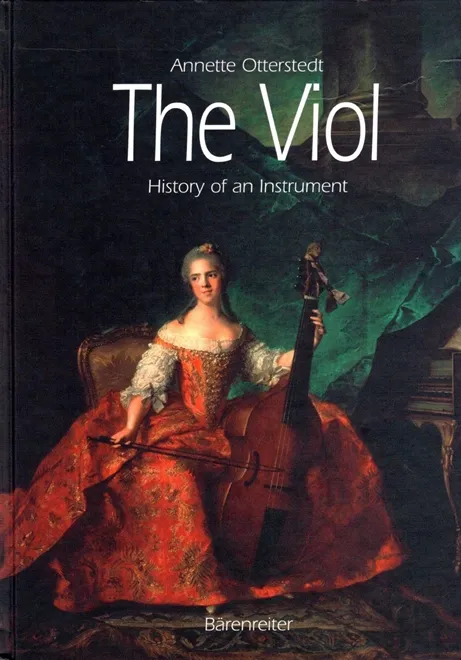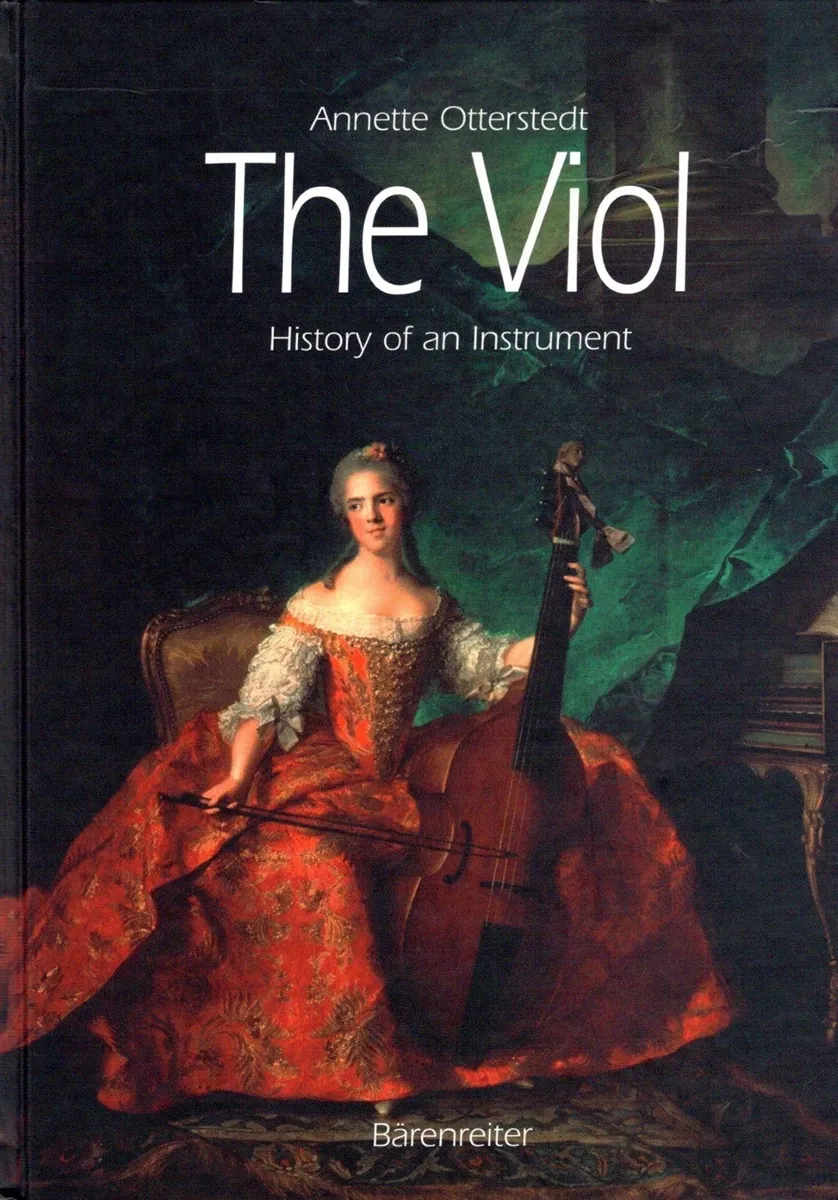
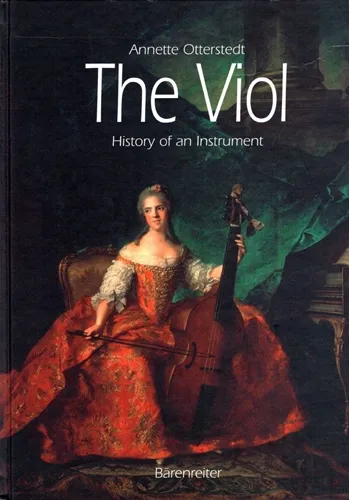
The Viol - History Of An Instrument
Marca: Barenreiter
Cód: V104583P
Nº de Páginas: 294
ISBN: 9783761811511
Enviamos para todo Brasil e Exterior
Quantidade
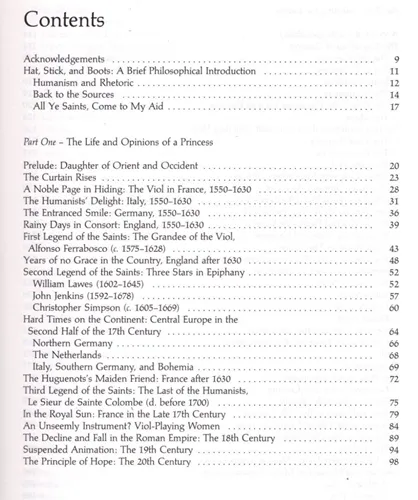
História da Viola da Gamba por Annete Otterstedt, traduzido do alemão para inglês por Hans Reiners. Contém:
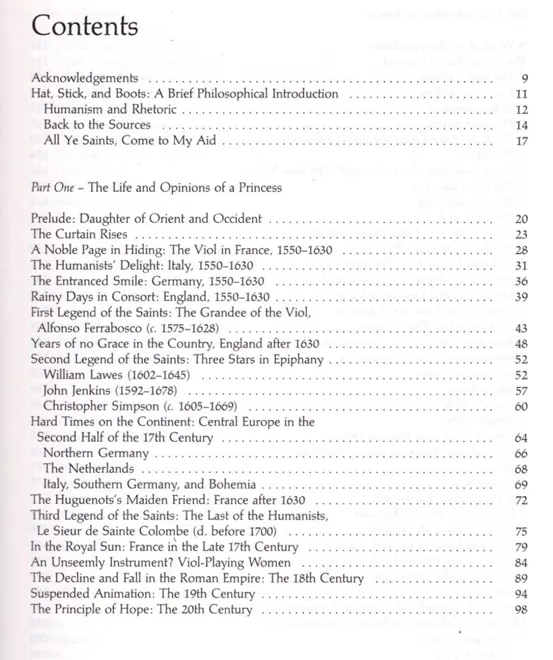
Acknowledgements
Hat, Stick, and Boots: A Brief Philosophical Introduction:
Humanism and Rhetoric
Back to the Sources
All Ye Saints, Come to My Aid
Part One - The Life and Opinions of a Princess:
Prelude: Daughter of Orient and Occident
The Curtain Rises
A Noble Page in Hiding: The Viol in France, 1550-1630
The Humanists' Delight: Italy, 1550-1630
The Entranced Smile: Germany, 1550-1630
Rainy Days in Consort: England, 1550-1630
First Legend of the Saints: The Grandee of the Viol, Alfonso Ferrabosco (c. 1575-1628)
Years of no Grace in the Country, England after 1630
Second Legend of the Saints: Three Stars in Epiphany William Lawes, John Jenkins, Christopher Simpson
Hard Times on the Continent: Central Europe in the Second Half of the 17th Century Northern Germany, The Netherlands, Italy, Southern Germany, and Bohemia
The Huguenots's Maiden Friend: France after 1630
Third Legend of the Saints: The Last of the Humanists, Le Sieur de Sainte Colombe (d. before 1700)
In the Royal Sun: France in the Late 17th Century
An Unseemly Instrument? Viol-Playing Women
The Decline and Fall in the Roman Empire: The 18th Century
Suspended Animation: The 19th Century
The Principle of Hope: The 20th Century
Part Two - Meeting the Family:
A Word about Respectability
The Respublica of Consort The 16th Century, The 17th Century, Instrumentation, The Instruments, The Role of the Organ, The Music
No Less Swift than the Violin itself: The Bass Viol The Viola Bastarda, The Division Viol, The Lyra Viol, Other Viols with Sympathetic Strings, The Seven-Stringed Bass Viol
The Slighted Inner Part: The Tenor Viol
Sweet, but too Weak: The Treble Viol Treble Viol and Dessus de Viole, Pardessus de Viole and Quinton
A Royal Rumble: The Violone
A Humanist Parody: The Arpeggione
Observations on Viol Construction Renaissance, Italian, English, French and German Viols and the Late Period; Conversions, Forgeries, Reconstructions
Pitch
Transposition
The Well-Tuned Violdigamb Germany, France, Italy and Spain in the 16th Century; France in the 17th and 18th Centuries, England in the 17th Century, The Violone
The Well-Tempered Viol: Muiscal Temperament
The Salt and Mustard of Music: Ornamentation ''Artificioso'' and ''Graceful'' Play, Should One Ornament in Consort?, The Well-Shaped Lady's Leg
Aspects of Playing Technique Holding the Instrument
The Left Hand ''Holds'' and ''Tenues'', Position of the Left Thumb, Open String or Stopped String?, Changing Positions, Treble-Viol Fingering
The Right Hand The Use of the Bow, Forms of Articulation
Part Three - Maintaining a Princess in Style:
A Word about Quality What is a Good Instrument?, How to Procure a Good Instrument
The Well-Appointed Viol Construction and Materials, Ornaments, The Varnish, Accessories
The Bow
Beauty in Eclipsa: Conclusion
Appendix:
Notes
Bibliography
Index
List of Illustration
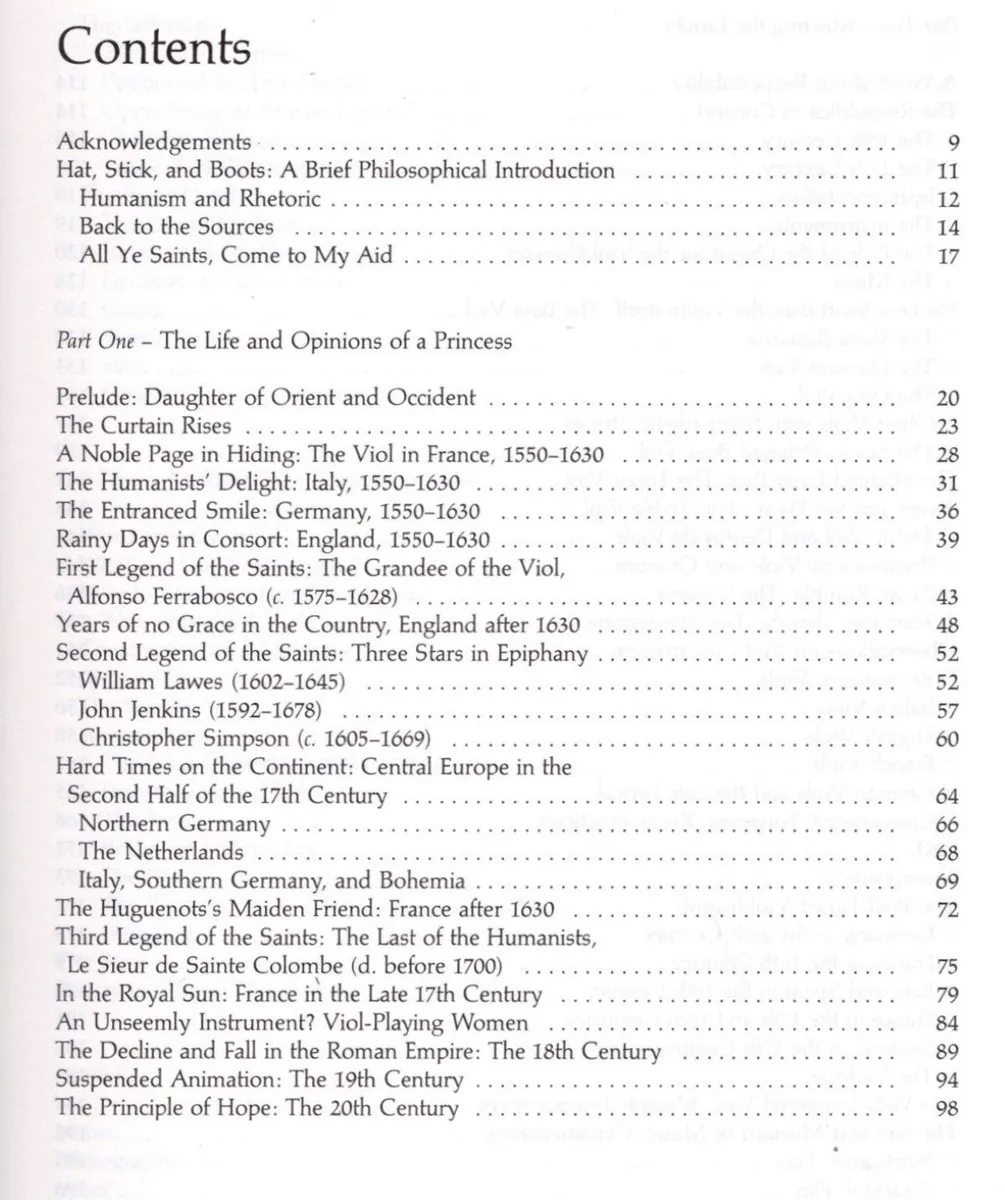
Acknowledgements
Hat, Stick, and Boots: A Brief Philosophical Introduction:
Humanism and Rhetoric
Back to the Sources
All Ye Saints, Come to My Aid
Part One - The Life and Opinions of a Princess:
Prelude: Daughter of Orient and Occident
The Curtain Rises
A Noble Page in Hiding: The Viol in France, 1550-1630
The Humanists' Delight: Italy, 1550-1630
The Entranced Smile: Germany, 1550-1630
Rainy Days in Consort: England, 1550-1630
First Legend of the Saints: The Grandee of the Viol, Alfonso Ferrabosco (c. 1575-1628)
Years of no Grace in the Country, England after 1630
Second Legend of the Saints: Three Stars in Epiphany William Lawes, John Jenkins, Christopher Simpson
Hard Times on the Continent: Central Europe in the Second Half of the 17th Century Northern Germany, The Netherlands, Italy, Southern Germany, and Bohemia
The Huguenots's Maiden Friend: France after 1630
Third Legend of the Saints: The Last of the Humanists, Le Sieur de Sainte Colombe (d. before 1700)
In the Royal Sun: France in the Late 17th Century
An Unseemly Instrument? Viol-Playing Women
The Decline and Fall in the Roman Empire: The 18th Century
Suspended Animation: The 19th Century
The Principle of Hope: The 20th Century
Part Two - Meeting the Family:
A Word about Respectability
The Respublica of Consort The 16th Century, The 17th Century, Instrumentation, The Instruments, The Role of the Organ, The Music
No Less Swift than the Violin itself: The Bass Viol The Viola Bastarda, The Division Viol, The Lyra Viol, Other Viols with Sympathetic Strings, The Seven-Stringed Bass Viol
The Slighted Inner Part: The Tenor Viol
Sweet, but too Weak: The Treble Viol Treble Viol and Dessus de Viole, Pardessus de Viole and Quinton
A Royal Rumble: The Violone
A Humanist Parody: The Arpeggione
Observations on Viol Construction Renaissance, Italian, English, French and German Viols and the Late Period; Conversions, Forgeries, Reconstructions
Pitch
Transposition
The Well-Tuned Violdigamb Germany, France, Italy and Spain in the 16th Century; France in the 17th and 18th Centuries, England in the 17th Century, The Violone
The Well-Tempered Viol: Muiscal Temperament
The Salt and Mustard of Music: Ornamentation ''Artificioso'' and ''Graceful'' Play, Should One Ornament in Consort?, The Well-Shaped Lady's Leg
Aspects of Playing Technique Holding the Instrument
The Left Hand ''Holds'' and ''Tenues'', Position of the Left Thumb, Open String or Stopped String?, Changing Positions, Treble-Viol Fingering
The Right Hand The Use of the Bow, Forms of Articulation
Part Three - Maintaining a Princess in Style:
A Word about Quality What is a Good Instrument?, How to Procure a Good Instrument
The Well-Appointed Viol Construction and Materials, Ornaments, The Varnish, Accessories
The Bow
Beauty in Eclipsa: Conclusion
Appendix:
Notes
Bibliography
Index
List of Illustration
- Tipo de entrega
- Preço
- Prazo
- {{#each deliveryMethods}}
-
{{ DeliveryName }}
{{ formatMoney Amount }}
{{ EstimatedUnit }}
{{/ each}}